Grief and Loss in Childhood: A Parent’s Guide
When a child loses someone they love, parents often feel uncertain about how to help. Grief and loss in childhood is a natural process, and children grieve in their own ways. Understanding their responses can guide you through one of life’s most difficult experiences. Whether your young child has lost a family member, friend, or beloved pet, knowing how to explain death and recognize grief behaviors makes a profound difference.
Is it normal for children to grieve?

Grief is completely normal at any age, including childhood. Young children, school age children, and even very young children are aware of death, even if they don’t fully grasp its permanence. Children grieve differently than adults, often moving between sadness and play within minutes.
This doesn’t mean they aren’t grieving—it’s simply how many children process painful feelings. Bereaved children may experience waves of intense emotion followed by periods where they seem unaffected. This pattern is part of normal childhood grief. The grieving child might cry while remembering a deceased family member one moment, then return to playing with their child’s friends the next.
How do children understand death at different ages?
A child’s developmental stage shapes how they comprehend death and their grief responses evolve as they grow.
Very young children (toddlers and preschoolers) struggle with death’s permanence. They may engage in magical thinking, believing the deceased person will return or that their thoughts caused the death. Young children might repeatedly ask when the dead person is coming back—not from forgetfulness, but because they’re still processing what “forever” means. It’s normal for very young children to think death is temporary.
School age children (roughly ages 6-12) understand death is permanent but still have many questions. They want concrete details about what happened and may worry about their own health or the safety of surviving family members. These younger children often express feelings through drawing, play, or storytelling rather than direct conversation.
Young adults and teenagers grasp death’s finality but struggle with existential questions about meaning and fairness. Adolescents might mask grief to appear strong or withdraw from other family members while processing their own grief privately. They may also shoulder adult responsibilities to help grieving parents, sometimes neglecting their own emotional needs.
How should I explain death to my child?
Use simple, clear, honest language when explaining death to children. Avoid euphemisms like “passed away,” “lost,” or “eternal sleep”—these confuse younger children who may think the person is literally lost or sleeping.
Say directly that the person died and their body stopped working. When a parent dies or another family member passes away, answer questions truthfully while matching your explanation to the child’s age. A young child needs basic facts: “Grandma’s heart stopped working and she died. Her body can’t work anymore.” An older child might want medical details or information about what happens next.
Age appropriate language helps children understand death without overwhelming them. Let your child ask questions repeatedly—this is how bereaved children process information. Some children need to hear the same explanation many times as their understanding deepens. Each time you explain death, you’re helping them build comprehension at their developmental level.
Key insight: Children aren’t being difficult when they ask the same questions about death repeatedly. Each time they ask, they’re building deeper understanding at their developmental level.
Share your religious beliefs or cultural traditions about what happens after death if that provides comfort, but recognize that a child’s life experience and developmental level will shape how they interpret these concepts.
What grief behaviors should I expect?
Grieving children show emotions in many ways, and recognizing these grief responses helps you understand what your child is experiencing.
Emotional signs include sadness, anger, anxiety, guilt, or numbness. Many children worry they caused the death or fear other family members will die too. A grieving child might become clingy or afraid of separation from their remaining parent or caregivers. These are normal grief reactions that show how children respond to loss.
Behavioral changes are common grief responses. Bereaved children may:
- Act younger than their age (regression)
- Struggle concentrating on schoolwork, affecting school performance
- Withdraw from their child’s friends or everyday life activities
- Show anger through tantrums or defiance
- Lose interest in previously enjoyed activities
Physical symptoms can accompany emotional distress. Grieving children might complain of headaches or stomachaches, experience appetite changes, or have sleep difficulties. These physical symptoms are the body expressing difficult feelings.
The grieving child often mirrors adult emotional responses around them. Children notice how family members cope and may imitate grieving parents’ behaviors. When you show that it’s safe to express feelings, your child learns healthy ways to process their own grief.
How can I help my child cope with grief?
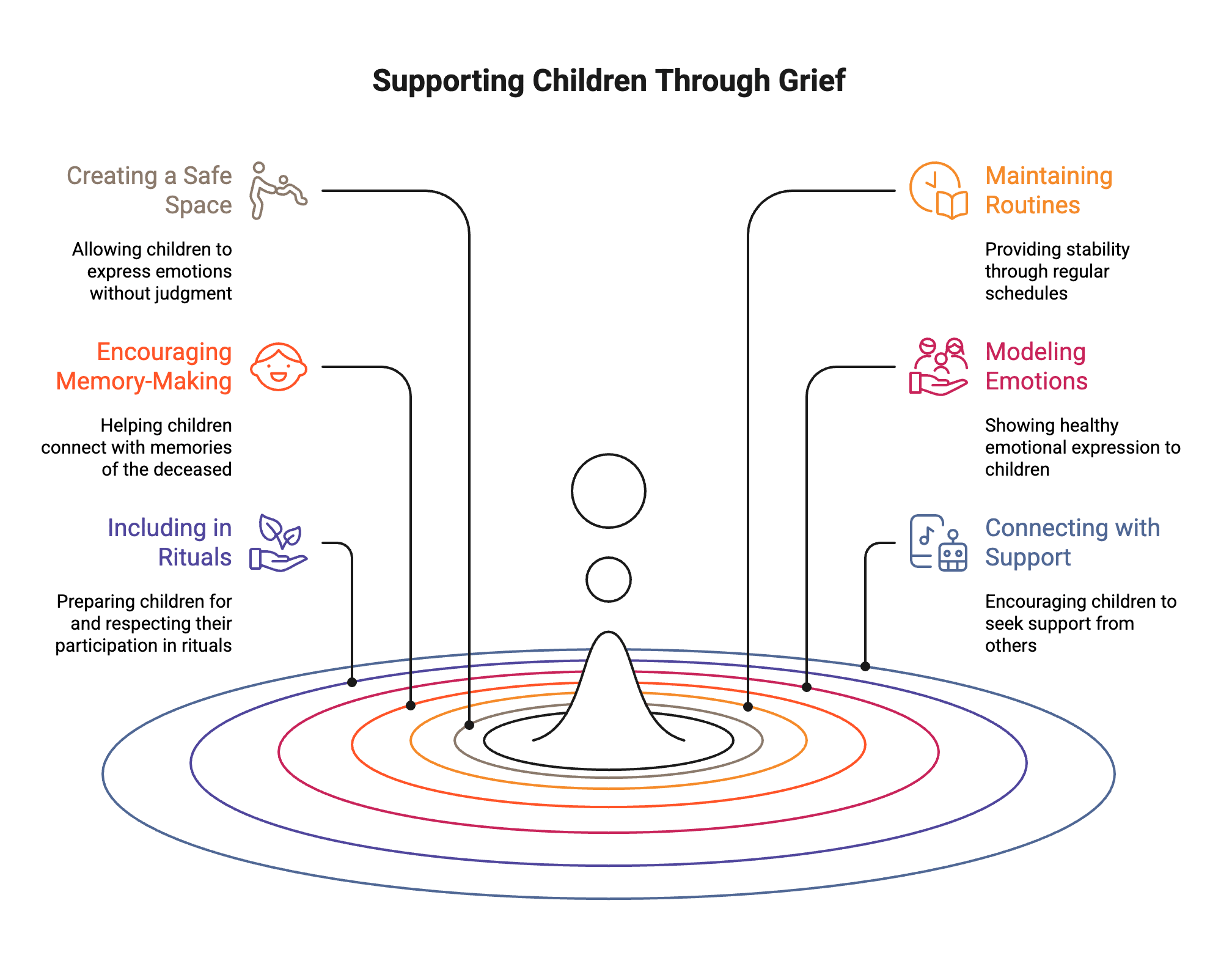
Create a safe space for your child to express feelings without judgment. Let them know all emotions are okay—sadness, anger, confusion, even moments of happiness. Some children share more easily through play, art, or stories than direct conversation.
Maintain everyday life routines as much as possible. Regular mealtimes, bedtime rituals, and school schedules provide stability when a child’s world feels uncertain. This structure offers security while they process childhood grief.
Encourage memory-making. Talk about the deceased person, look at photos together, or create a memory box with special items. These activities help bereaved children maintain connection while acknowledging the loss. Let your child’s responses guide how often to engage.
Be honest about your emotions. When grieving parents show appropriate vulnerability, children learn that grief is normal and caring adults also feel sad. You can model healthy emotional expression while still providing security as children grieve alongside you.
Include children in rituals when appropriate. Many children benefit from attending funerals or memorial services if prepared for what to expect. Explain what will happen, who will be there, and that leaving is okay if they feel overwhelmed. Respect their choice not to participate. Preparing a young child for what they’ll see helps them cope better with the experience.
Remember: You don’t need to hide your grief from your child. When they see you cry and then see you continue functioning, they learn that strong emotions are manageable and that life continues even while grieving.
Connect with support people. Encourage your grieving child to talk with other family members, trusted teachers, or caring adults who knew the deceased. Support groups for bereaved children provide peer connection and normalize their experience. In the Charleston area, organizations like Bridges of Hope offer camps for grieving children aged 6 to 15 on Seabrook Island. These grief support resources help children understand they’re not alone.
When should I seek professional help for my grieving child?
Most children grieve without developing serious problems, but some benefit from professional support to help children grieve in healthier ways.
Consider counseling if your grieving child:
- Shows intense grief that doesn’t ease over a long period
- Has persistent trouble eating, sleeping, or functioning in everyday life
- Expresses thoughts of self-harm or wanting to die
- Demonstrates extreme guilt or believes they caused the death
- Withdraws completely from friends and activities for extended periods
- Shows sudden, dramatic changes in school performance or behavior
Professional grief support helps when childhood grief becomes prolonged or complicated. Therapists trained in child bereavement provide tools to help your child cope with loss in healthy ways. This specialized support addresses the psychosocial aspects of grief and helps grieving children process their emotions.
The Shawn Jenkins Children’s Hospital offers a Bereavement Program supporting grieving families experiencing the death of a child in the Charleston area. A bereaved parent can also ask their pediatrician to recommend grief counselors or support groups in Mt. Pleasant. Whether your family is processing the death of a parent, sibling, or other significant person, professional support helps address child and family health needs.
Important: Seeking help isn’t a sign of failure—it’s a proactive step toward supporting your child’s emotional health during one of life’s most challenging experiences.
Remember that processing grief isn’t linear. Difficult feelings may resurface during holidays, birthdays, or other significant moments, even years after the death of a family member. This is normal and doesn’t mean your child isn’t healing.
How does childhood grief affect adulthood?
Experiencing the death of a parent or other significant loss during childhood can have lasting effects. The way children grieve and process loss shapes their emotional development and influences how they handle difficult feelings as they grow.
Adult children who lost family members in childhood often carry these experiences into their relationships and coping strategies. Research shows that bereaved children who received support from caring adults and had opportunities to express feelings typically develop healthier coping mechanisms. This demonstrates the importance of helping children understand death and teaching them that grief is a normal response to loss.
When one parent or both parents help a child cope effectively during early childhood loss, it builds resilience. Young people who learn to express their emotions and receive validation for their grief responses develop stronger emotional regulation skills as young adults.
Supporting the whole family
When the death of a family member occurs, every member grieves differently. Adult children, younger children, and parents each process loss in their own way. One parent might need frequent conversation while the other parent prefers private reflection. This diversity in grief responses is normal and healthy.
Be patient with yourself and other family members as everyone navigates their own grief. The death of a family member changes family dynamics, and adjustment takes time. Keep communication open, check in with each child individually, and recognize that everyone’s grief journey looks different. Bereaved parents need support too while they help their children cope.
We’re Here to Help in Mt Pleasant and Charleston
If you’re looking for support with childhood grief, the therapists at Therapy Group of Charleston are here to help. Schedule an appointment to discuss how therapy can support your child and family through this difficult time.
Disclaimer: This article is for educational purposes only and is not a substitute for professional medical advice, diagnosis, or treatment. Always seek the advice of your physician or qualified mental health provider with any questions you may have regarding a medical or mental health condition. If you are in crisis or experiencing thoughts of self-harm, please call 988 (Suicide and Crisis Lifeline) or go to your nearest emergency room.