When Grief Won’t Let Go: Understanding Complicated Grief and How Therapy Helps
Losing someone you love is one of life’s most painful experiences. In the weeks and months after a loss, intense feelings of sadness, anger, and longing are completely normal. For most people, these feelings gradually soften, allowing them to begin healing. The grieving process looks different for everyone, and it’s common for individuals to experience overwhelming feelings of loneliness and fear during this time.
But for some, the pain stays just as raw months or even years later, making it hard to function. If you’re struggling with grief that won’t ease, you might be experiencing complicated grief—and therapy can help.
What Is Complicated Grief?

Prolonged grief keeps you stuck in intense pain long after a loss. Unlike typical grief that gradually becomes manageable, this persistent form interferes with your ability to function daily.
About 15% of people who lose a loved one develop complicated grief. Symptoms include persistent yearning, difficulty accepting the death, feeling life has no meaning, and avoiding reminders. These feelings stay intense for a year or longer.
The key difference is how it impacts daily functioning. While everyone grieves differently, prolonged symptoms prevent you from moving forward, maintaining relationships, or finding relief. Some find a support group helpful for understanding they’re not alone. A grief group, therapy group, or bereavement group can provide perspective that individual sessions may not. Group support complements professional therapy effectively, and many people attend both a weekly group and individual appointments.
What Are the Signs You Might Need Grief Counseling?
Knowing when grief requires professional help can be difficult. Your pain is real no matter how long you’ve been grieving, but certain symptoms suggest therapy from a grief specialist could help. Everyone grieves at their own pace, and there’s no timeline for when you should “move on.” People commonly refer to the five familiar stages of grief as defined by psychiatrist Elisabeth Kubler-Ross, but not everyone experiences these stages in the same way or order.
Consider therapy if you’re experiencing:
- Persistent inability to accept the death, even many months later, or feelings that it can’t be real
- Intense emotional pain that disrupts work, family care, or relationships and doesn’t soften over time
- Avoiding people, places, or activities that remind you of your loved one to the point it limits your life
- Feeling life has no purpose without the person who died, making it hard to find meaning or hope
- Difficulty experiencing positive emotions or feeling emotionally numb when trying to connect with others
- Intrusive thoughts or images about the death that you can’t control, disrupting your daily activities
These feelings can make it incredibly difficult to grieve in a healthy way.
If the death was sudden or traumatic—from an accident, suicide, or homicide—you’re at higher risk for prolonged grief. Traumatic loss often requires specialized support to process both the trauma and the grief itself.
How Does Grief Counseling Actually Work?
Grief counseling provides structured, professional support to understand your feelings and develop coping strategies. Unlike talking with friends, therapy offers guidance based on research about what helps people heal. Therapists provide practical tools and exercises like journaling or mindfulness to help individuals manage their grief. Some therapists also recommend joining a support group alongside individual sessions.
In sessions, your therapist will help you:
Process feelings safely. You’ll express sadness, anger, guilt, or despair without judgment. Therapy helps you understand your reactions are normal. You’ll learn there’s no right way to grieve.
Learn about the grief process. Understanding how grief affects your thoughts, feelings, and body reduces anxiety about symptoms. Your therapist explains what to expect and helps you track patterns in how you grieve.
Challenge unhelpful thoughts. If you’re experiencing guilt, shame, or hopeless beliefs, cognitive behavioral therapy helps you develop balanced perspectives. Many people grieving struggle with “should” statements—therapy helps replace these with self-compassion.
Gradually face avoided situations. Many people avoid places or activities connected to loss. Your counselor helps you slowly approach these reminders so they become less overwhelming, helping you grieve without being controlled by avoidance.
Reconnect with life and meaning. Therapy helps you honor your loved one’s memory while rediscovering purpose, joy, and connection. This doesn’t mean forgetting—it means learning to carry your loss while living fully.
What Happens in Your First Session?
Your first appointment focuses on understanding your experience. Your therapist will ask about the person you lost, the circumstances, and how it has affected your daily life. This creates a treatment plan tailored to your needs. You’ll also discuss your goals for therapy.
Does Grief Counseling Really Help?
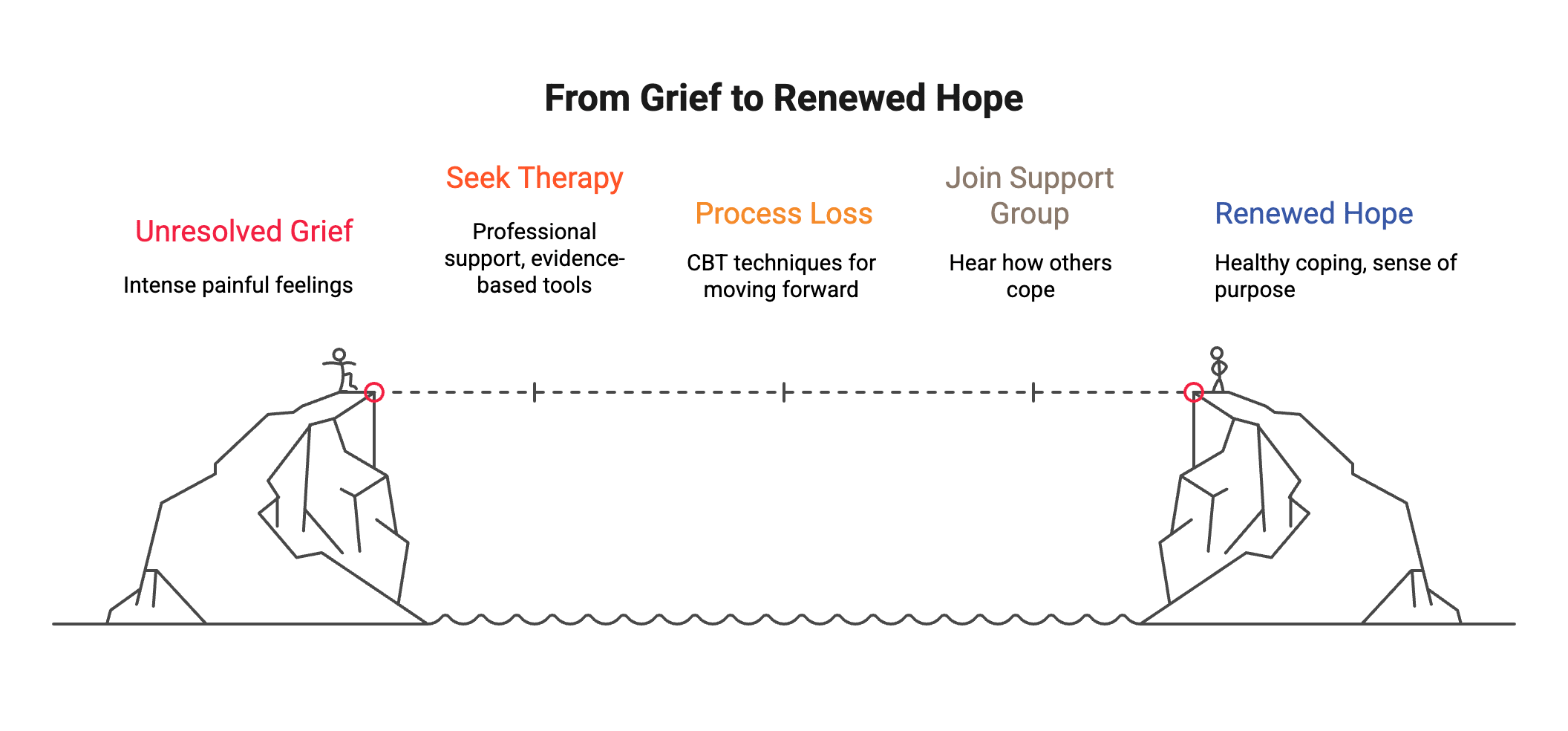
Research strongly supports grief-focused therapy, especially for prolonged symptoms. Studies show grief counseling significantly reduces depression and anxiety. When you’re ready to grieve with professional support, therapy offers evidence-based tools that help.
One treatment approach has proven particularly effective for those struggling to move forward, combining cognitive behavioral therapy with specific techniques for processing loss. Most people who complete this therapy experience meaningful improvement in functioning and renewed hope. Many find that support groups complement individual sessions. In a group environment, you hear how others cope.
Benefits of grief counseling often include:
- Reduced intensity of painful feelings
- Better ability to accept the loss
- Improved family relationships
- Greater capacity for positive feelings
- Healthy coping strategies
- Renewed sense of purpose
Healing doesn’t mean forgetting your loved one or “getting over” the loss. Grief counseling helps you carry grief in a way that allows you to live again.
What Types of Grief Support Are Available in Charleston?
If you’re in Mt. Pleasant or Charleston, you have several grief support options beyond individual therapy.
Grief support groups offer connection with others who understand what you’re going through. A support group provides peer support and shared experiences that can be deeply healing. Many people find grief support groups especially helpful when combined with individual counseling. Grief support groups can be found in private counselors, hospices, churches, and community organizations.
- GriefShare, a support group meeting at churches throughout the tri-county area with structured weekly sessions
- Hospice of Charleston, now called Gentiva Hospice, offering bereavement counseling and grief support groups for bereaved parents
- Survivors of Homicide support groups, a specialized support group meeting regularly for those who’ve lost someone to violence (Charleston County Sheriff’s Office partnership)
- Compassionate Friends, a support group providing peer support for parents, grandparents, and siblings after a child’s death
Many people find that combining individual grief counseling with a support group works well. The support group provides peer connection and a group setting where others truly understand, while individual therapy offers personalized treatment for your specific needs.
For families with children who are grieving, programs like Bridge’s Stepping Stones (weekend camp for children) and other periodic programs provide age-appropriate support in North Charleston, West Ashley, downtown Charleston, and Seabrook Island. These programs help children process their feelings and connect with other children experiencing loss. A specialized support group for children can be especially valuable in helping them understand they aren’t alone.
When Should You Seek Professional Help for Grief?
While grief support groups and family comfort are valuable, professional therapy becomes important when:
- Grief interferes with work, parenting, or daily responsibilities
- You’re having thoughts of self-harm or feel life isn’t worth living
- You’re using alcohol or substance abuse to cope with painful feelings
- Physical symptoms like sleep problems or appetite changes persist for months
- You feel stuck in anger, despair, or denial months after the loss
- Your relationships are suffering because you can’t express your feelings
You don’t need to wait until prolonged symptoms develop. Starting therapy early helps you develop healthy coping strategies. Whether you choose individual therapy, support groups meeting weekly, or both, getting support matters. Many people combine both approaches—support groups for community and individual sessions for personalized care.
Finding Hope After Loss
Your pain is real, and the depth of your loss reflects the depth of your love. Feeling stuck doesn’t mean you’re weak—it means you need support to process an overwhelming experience. Learning to grieve in a way that honors both your feelings and your need to continue living takes time and guidance.
Grief counseling offers practical tools, professional expertise, and compassionate support. Whether through individual therapy, support groups, or both, help is available. With the right support, most people experiencing prolonged symptoms find relief and rediscover their ability to engage with life and family—even while honoring their loved one’s memory.
If you’re looking for support in Charleston, the therapists at Therapy Group of Charleston understand how overwhelming loss can feel. We work with individuals, children, and families navigating the grieving process. Schedule an appointment to begin finding your path toward healing.
Frequently Asked Questions About Grief Counseling
What are the different types of grief?
Grief can manifest in various ways, including emotional, physical, behavioral, social, or cognitive responses. Some common types include typical grief, complicated grief—which lasts for over a year and significantly affects daily functioning—and traumatic grief, which occurs after sudden or unexpected loss such as accidents or homicide.
How can grief counseling help me overcome intense feelings of grief?
Grief counseling provides helpful resources and practical coping strategies to manage intense feelings like anxiety, anger, and despair. Therapists guide you through the stages of grief, helping you process your emotions, develop resilience, and gradually reconnect with life and meaning.
Are there specialized support groups for specific types of loss?
Yes, there are specialized grief support groups such as survivors of homicide groups, families of highway fatalities, and those dealing with substance abuse-related losses. These groups provide peer support and periodic programs tailored to unique experiences.
What should I do if I am struggling with grief related to job loss?
Job loss can trigger grief similar to other significant losses. Seeking grief counseling can help you deal with the stress and emotional pain associated with this change, offering guidance to deal with the loss and find a new sense of purpose.
How can I find grief support groups or additional information in my area?
Many grief support groups meet regularly, including spring and fall sessions, often on the first and third Thursday or the fourth Thursday of the month. You can contact organizations like the Charleston County Sheriff’s Office or local therapists such as Charlotte Anderson for additional information and support.
What resources are available for suicide prevention and support?
Suicide prevention resources include support groups like survivors of suicide, which often meet online or in person. The American Foundation for Suicide Prevention offers valuable information and support, and crisis lifelines are available 24/7 to provide immediate help.
Disclaimer: This article is for educational purposes only and is not a substitute for professional medical advice, diagnosis, or treatment. Always seek the advice of your physician or qualified mental health provider with any questions you may have regarding a medical or mental health condition. If you are in crisis or having thoughts of self-harm, please call 988 (Suicide and Crisis Lifeline) or visit the nearest emergency room immediately.