The Three C’s of Childhood Grief: What Parents Need to Know
When a child loses someone important, parents often wonder how to help. Childhood grief looks different from adult grief, and child grief experts have identified three core concerns that grieving children struggle with most: Did I cause it? Can I catch it? Who will care for me? Understanding these “Three C’s” can help you support your young child through one of life’s hardest experiences.
What Are the Three C’s of Grief?

The Three C’s are the primary worries children have when someone dies: Cause, Contagion, and Care. These concerns reflect how children understand death at different developmental stages.
When bereaved children try to make sense of loss, they often blame themselves (Cause), worry that death is contagious (Contagion), or fear that no one will take care of them (Care). Supporting grieving children means addressing each fear directly and honestly.
Very young children especially struggle with magical thinking—the belief that their thoughts or actions caused the death. Younger children might think “Mommy died because I was bad” or “Grandpa left because I didn’t finish my vegetables.” This is why talking to children about death with clear, age appropriate language matters so much.
Did I Cause It? (Cause)
Many children secretly worry they caused the death. A grieving child might remember a fight with their sibling who died, or think their angry thoughts made a parent sick.
Children between ages three and six engage in magical thinking and may believe their wishes or behavior can make things happen. School age children understand more about how death works, but may still carry guilt about things they said or didn’t say.
Parents should reassure children directly: “Nothing you did, thought, or said caused this person to die.” Repeat this message as needed—children process information over time and may need to hear it many times.
Can I Catch It? (Contagion)
The second C addresses a child’s fear that death is contagious. Grieving children may worry: “Will I die too?” “Will you die?” “Is death like a cold that spreads to other family members?”
This fear is especially strong when the person who died was sick or when death was sudden. Young children don’t yet understand that death has specific causes—they just know someone is gone and wonder if they’re next.
Address this concern by explaining what happened in simple, honest terms. Avoid euphemisms like “eternal sleep” which can make children afraid to go to bed. Instead, say something like: “Grandma died because her very old heart stopped working. Your heart is young and healthy. You are safe.”
Who Will Care for Me? (Care)
The third C reflects a child’s most basic need: security. When a family member dies, children worry about their own survival and safety. They might think: “If Mom died, who will take care of me?” “Will Dad leave too?” “What will happen to me?”
This fear affects grieving children of all ages but shows up differently. A young child might start wetting the bed again or refuse to separate from their surviving parent. Pre adolescent children might become clingy or anxious. Adolescents might act out or withdraw.
Supporting children following bereavement includes providing clear reassurance about who will care for them and maintaining consistent routines that help children feel safe.
How Does Grief Affect a Child?
Grief impacts every part of a child’s life—emotions, behavior, sleep, eating, and relationships. The grieving process looks different for each child based on their developmental stage and personality.
Common grief reactions in bereaved children include:
- Emotional swings — Moving quickly from sadness to play and back again
- Behavioral changes — Acting younger than their age, tantrums, or withdrawal
- Sleep disturbances — Nightmares, fear of sleeping alone, or trouble falling asleep
- Separation anxiety — Clinging to other family members or refusing to go to school
- Physical symptoms — Headaches, stomachaches with no medical cause
Younger children may express feelings through play rather than words. They might reenact the death with toys or draw pictures of the person who died. This is normal and healthy—play is how many children process difficult feelings.
Older grieving children and teens understand death more like adults do, but they still need support. They might struggle with their own emotions while trying to protect surviving parents. They may have questions about their own mortality or worry about the future.
A child’s reaction to loss depends on many factors, including age, relationship to the person who died, and the support available. Some children need more time to process their grief than others.
At What Age Is Grief the Hardest?
There’s no single age when grief is hardest—each developmental stage brings different challenges. What makes grief difficult isn’t the child’s age but how well their needs are met during the grieving process.
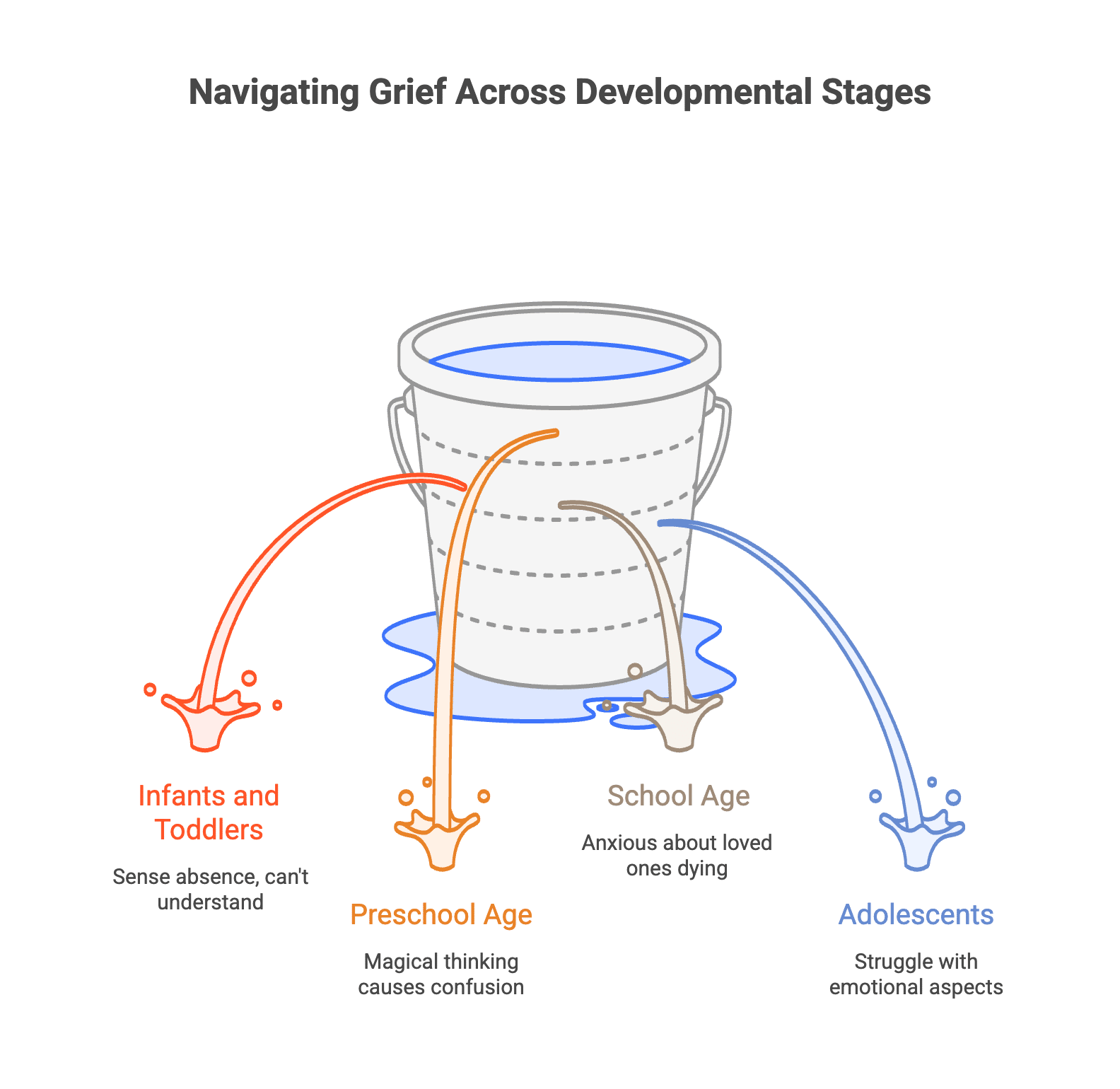
Infants and Toddlers
Very young children sense when something has changed but can’t understand what happened. They may become fussy, clingy, or regress in development. Parents often think babies won’t grieve because they won’t remember, but even infants feel the absence of someone important in their daily life.
Preschool Age (3-6)
Young children this age struggle most with magical thinking and the Cause concern. They’re old enough to notice the death but not old enough to understand it fully. This can lead to confusion and guilt that affects their sense of security.
School Age (6-12)
School age children understand that death is permanent but may become anxious about other loved ones dying. They might worry excessively about their surviving parent’s health or safety. Some grieving children this age take on adult responsibilities to help their grieving families.
Adolescents
Adolescents understand death cognitively but may struggle more with the emotional and spiritual aspects. Young people at this age might question their beliefs, feel isolated from peers, or act out their pain through risky behavior. Prolonged grief in teens can sometimes require professional support.
Key Insight: The hardest age for grief is often the age your child is right now—because you’re living through it together.
How Can Parents Support Grieving Children?
The most important thing you can do is be present and honest. Children take cues from adults about how to handle difficult feelings. When parents model healthy ways to grieve, children learn that sadness is normal and manageable.
While children understand death differently than adults, they benefit when parents share their own emotions in age-appropriate ways. That openness—paired with patience for however your child reacts—creates space for healing.
Addressing the Three C’s
Here’s how to support each core concern:
For Cause concerns:
- Directly state that nothing the child did caused the death
- Watch for signs of guilt (withdrawal, acting out, regression)
- Repeat reassurance as often as needed
For Contagion fears:
- Explain what caused the death in age appropriate language
- Reassure the child about their own health and safety
- Answer questions honestly, even when you don’t have all the answers
For Care worries:
- Clearly explain who will take care of them
- Maintain routines and structure as much as possible
- Show physical affection and emotional availability
Creating Space for Expression
Let children express feelings in their own way. Some want to talk, others prefer to draw, play, or write. Supporting families after loss includes accepting all forms of expression.
Encourage your child to share memories of the person who died. Look at photos together, tell stories, or create memory items like scrapbooks. This helps children maintain connection while accepting the reality of the loss.
Remember: Children often “dose” their grief—feeling sad one moment, then returning to play the next. This doesn’t mean they’re not grieving. It means they’re processing loss in a developmentally appropriate way.
When Should You Seek Professional Help?
Most children work through grief with family support, but some need additional help. Consider reaching out to a counselor or therapist if your grieving child shows:
- Intense grief that doesn’t ease over time (months rather than weeks)
- Serious problems with eating, sleeping, or going to school
- Persistent talk about wanting to die or join the person who has died
- Complete withdrawal from friends and activities they used to enjoy
- Acting out in dangerous or self-destructive ways
Your pediatrician, your child’s school counselor, or a local hospice can often point you to grief support groups for children in the Charleston area. Professional counseling can give grieving families tools to navigate loss together.
Our therapists in Mount Pleasant see how a child’s loss ripples through the whole family. Many children find it helpful to talk with someone outside the family who can provide a safe space for their questions and emotions.
Moving Forward with Your Child
Grief doesn’t follow a timeline. Your child may seem fine one day and struggle the next. This is normal. Children often revisit their grief at different developmental stages as they gain new understanding about what the death means.
Be patient with yourself and your child. There’s no perfect way to handle childhood grief. What matters most is showing up, being honest, and creating space for whatever feelings arise.
Remember that addressing the Three C’s—Cause, Contagion, and Care—gives your child the foundation they need to process loss in healthy ways. When children feel safe, understand they didn’t cause the death, and know they’re protected, they can begin to heal.
Moving Forward: Grief changes shape over time but doesn’t disappear. Your willingness to talk openly about loss teaches your child that difficult feelings can be faced and survived.
Find Support in Charleston
If you’re supporting a grieving child in Charleston and need guidance, the therapists at Therapy Group of Charleston can help your family navigate this difficult time. We work with children as young as five, teens, and parents. Schedule an appointment to get started.
Frequently Asked Questions About Children and Grief
How do children typically express their grief?
Children may express their grief in many ways, including through behaviors such as acting younger than their age, changes in sleep or appetite, and emotional swings. Many children find it difficult to put their feelings into words, so they might use play, drawing, or storytelling as outlets to express distress and sadness.
What are common grief reactions in young children?
Very young children often experience separation anxiety, sleep disturbances, or may start wetting the bed again. They might act out or regress in behaviors as a way to cope with their feelings. Understanding these reactions as normal responses to loss can help parents provide the right support.
How can parents help a grieving child who feels guilty or angry?
Children may experience anger or guilt, especially if they engage in magical thinking and believe they caused the death. Parents should use age appropriate language to reassure children that they are not responsible for the loss and encourage open conversations to address these difficult feelings.
Why is it important to use direct language when talking about death?
Using clear and direct words like “dead” or “died” helps children understand the reality of loss. Euphemisms can create confusion or fear, interfering with a child’s ability to develop healthy coping skills and process grief effectively.
How can routines help grieving children?
Maintaining consistent routines provides a sense of safety and stability, helping children feel secure during a time of distress. Familiar schedules can reduce anxiety and support emotional healing as children navigate their grief.
When should parents seek professional support for their grieving child?
If a child shows persistent distress, such as intense sadness that doesn’t improve over time, withdrawal from friends, serious problems with sleep or school, or talks about wanting to die, it is important to seek help from a mental health professional experienced in childhood bereavement and grief support.
This article is for informational purposes only and is not a substitute for professional diagnosis or treatment. Always consult a qualified mental health professional about your own situation. Reading it does not create a therapist–client relationship.