Childhood Anxiety: How to Know When Your Child’s Worries Need Professional Help
Last updated: November 2025
All children experience worry and fear as they grow up. It’s normal for a child to feel anxious about starting a new school, meeting new people, or being away from parents. But childhood anxiety becomes a concern when these feelings are intense, persistent, and interfere with daily life. Anxiety disorders affect one in eight children, making them among the most common mental health conditions in young people. Knowing when your child’s worries cross the line from typical childhood fears to an anxiety disorder requiring professional help can be challenging for parents.
What’s the Difference Between Normal Worry and an Anxiety Disorder?

The key difference is intensity, duration, and impact. Normal childhood fears come and go, match developmental stages, and don’t significantly disrupt a child’s ability to function. A four-year-old afraid of the dark or a seven-year-old nervous about a spelling test is experiencing typical developmental anxiety. These worries are a normal part of growing up.
An anxiety disorder involves excessive worry that persists for weeks or months, causes significant distress, and interferes with school, friendships, or family life. Children with anxiety disorders often experience physical symptoms like stomach aches, headaches, or trouble sleeping. They may avoid activities they once enjoyed, cling to parents more than other children their age, or have difficulty concentrating.
The worry feels uncontrollable to the child and doesn’t ease even when parents offer reassurance. In South Carolina, 12% of children experienced anxiety or depression in 2020, reflecting a 55% increase since 2016. Many factors contribute to childhood anxiety in South Carolina, including family stress, school pressures, and poverty.
In our years working with families in Charleston, we consistently see parents struggling with this exact question—when does worry become too much? Many parents tell us they waited months or even years before seeking help because they kept hoping their child would “grow out of it.” We’ve learned that trusting your instinct as a parent matters. If your child’s anxiety feels like it’s taking over their life or yours, that’s usually a sign it’s time to reach out for support.
Types of Childhood Anxiety Disorders
Anxiety is not one disorder but rather a category of conditions. Common childhood anxiety disorders include:
- Generalized anxiety disorder – persistent worrying about many things like school performance, health, or family safety
- Separation anxiety disorder – extreme fear of being away from caregivers, beyond what’s typical for the child’s age
- Social anxiety disorder (also called social phobia) – intense fear of social situations or being judged by others
- Specific phobias – overwhelming fear of particular objects or situations like dogs, needles, or thunderstorms
- Panic disorder – unexpected panic attacks with physical symptoms like heart pounding, sweating, and shortness of breath
- Obsessive compulsive disorder – unwanted thoughts that lead to repetitive actions or rituals the child feels compelled to perform
- Post traumatic stress disorder – anxiety symptoms following a traumatic event, including flashbacks and extreme fear responses
Each presents differently across age groups, but all involve fear or worry that has grown beyond what’s developmentally appropriate.
What Are the Signs of Childhood Anxiety?
Watch for symptoms that persist for several weeks and create problems in multiple areas of your child’s life. Physical symptoms are often the first clue parents notice.
Physical Symptoms to Watch For
Children with anxiety disorders frequently report stomach aches, headaches, or fatigue without an identifiable medical cause. They may have trouble sleeping, complain of feeling tired all the time, or experience changes in appetite. During panic attacks, children may experience heart pounding, sweating, trembling, or feeling like they can’t breathe.
Behavioral Changes That Signal Anxiety
Behavioral changes offer important signals. An anxious child might start avoiding attending school, refuse to participate in activities they previously enjoyed, or become clingy and reluctant to separate from parents. Some children become irritable or have anger outbursts, which parents may not immediately recognize as anxiety. Others withdraw from friends or stop engaging in social situations.
Selective mutism, where a child speaks normally at home but becomes silent in specific settings like school, typically affects very young children and those in elementary school before age 10. Most children with this condition feel anxious about speaking in front of others, even though they’re capable of talking.
Academic and Social Red Flags
Academic and social difficulties often emerge as anxiety intensifies. Children may have trouble concentrating in class, leading to declining grades. They might avoid raising their hand, participating in group projects, or eating lunch in the cafeteria.
Your child’s teacher may notice them freezing when called on, appearing distressed during transitions, or seeking excessive reassurance. Many children with anxiety keep their worries to themselves, making child’s symptoms difficult to identify, so staying connected with your child’s teacher can provide valuable insight.
When Duration Matters
If your child’s anxiety symptoms persist for more than a few weeks, cause them significant distress, or interfere with their ability to attend school, maintain friendships, or participate in family activities, it’s time to seek professional evaluation.
At What Age Does Anxiety Peak in Children?
Anxiety can appear at any age, but different anxiety disorders tend to emerge at different developmental stages. Separation anxiety typically appears in very young children between ages 18 months and 3 years as a natural reaction to being away from caregivers. When it persists beyond age 6 or becomes severe, it may require treatment.
Social anxiety disorder often emerges during pre-adolescence and early teenage years, typically between ages 8 and 15, when children become more aware of how others perceive them. Generalized anxiety disorder can develop at any age but often appears in older children and teens who face increasing academic pressures and everyday challenges.
Understanding these patterns helps parents recognize when their child’s anxiety has moved beyond typical developmental fears for their age.
How Does Untreated Childhood Anxiety Affect Development?
Childhood anxiety can interfere with social development by making it difficult for children to form friendships and engage in peer interactions. Children with anxiety disorders often avoid social situations where they might meet new people or be the center of attention. This avoidance means they miss opportunities to develop social skills, learn to work through conflicts with a close friend, or build confidence in group settings.
Academic difficulties frequently accompany untreated anxiety. Difficulty concentrating impairs learning capabilities, and anxious children may underperform on tests despite knowing the material. Some develop school avoidance, missing critical instruction time. Over the long term, untreated anxiety can lead to lower educational attainment and reduced career opportunities.
Emotional development also suffers. Anxiety in children can negatively affect emotional regulation, leading to increased irritability and difficulty managing feelings. When anxiety persists without treatment, it often co-occurs with depression, compounding emotional and social challenges. Children may feel sad, hopeless, or lose interest in activities they once enjoyed. The long-term consequences include a higher risk of developing other mental health issues in adolescence and adulthood. A child’s developmental trajectory can be significantly altered if anxiety is left untreated, affecting their ability to handle stress well into adulthood.
What Treatment Options Are Available for Childhood Anxiety?
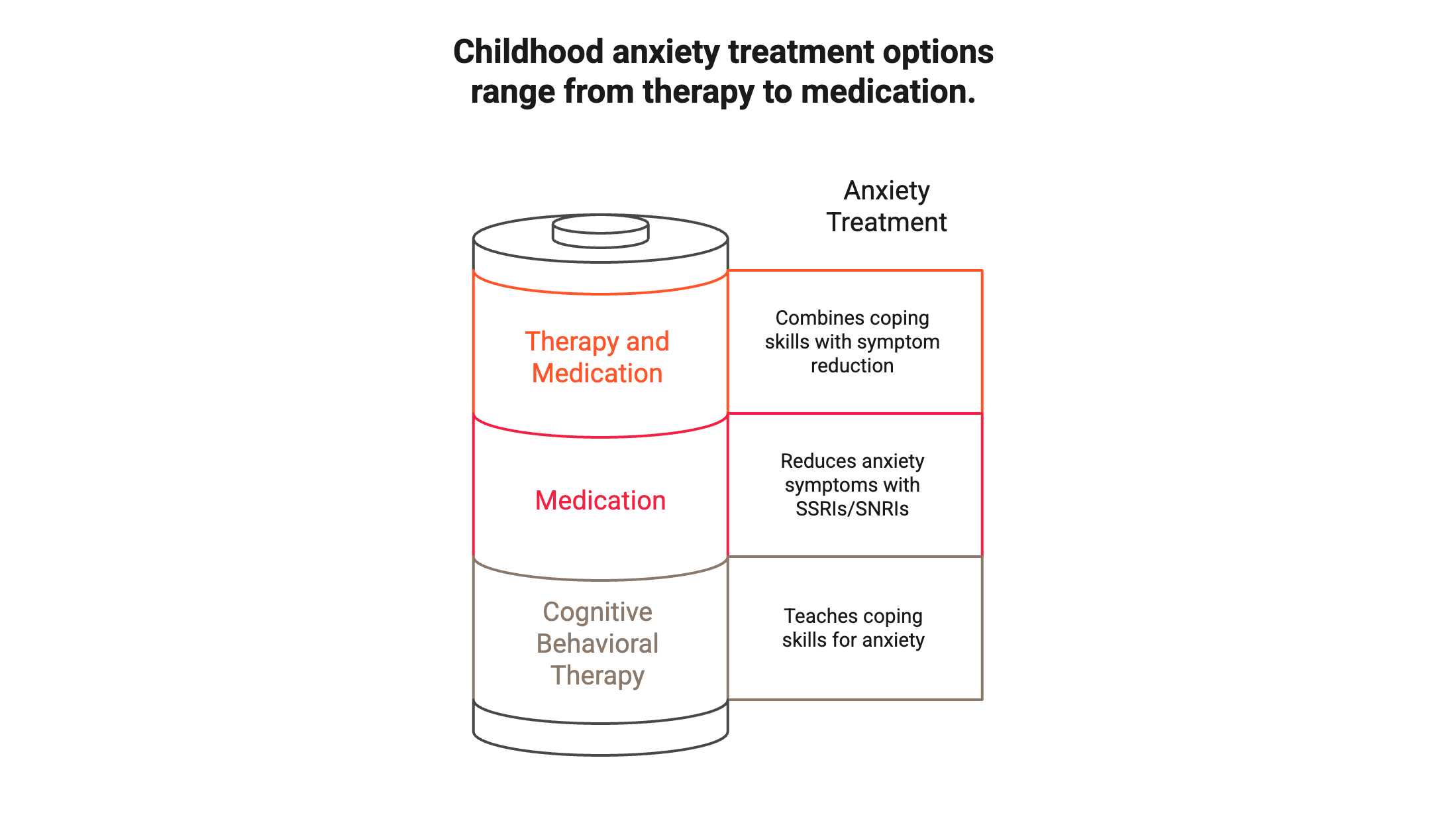
Cognitive behavioral therapy is considered the first-line treatment for childhood anxiety disorders. CBT helps children learn coping skills to manage anxious thoughts and feelings. This approach to treat childhood anxiety has strong research support across different types of anxiety disorders.
How CBT Works for Children
In therapy sessions, children practice facing their fears gradually through a process called exposure, learn techniques like deep breathing to calm their body’s stress response, and work on changing negative thoughts into more realistic ones. Children can learn these coping skills in individual therapy or group therapies, and both formats have shown effectiveness.
Treatment typically involves 12 to 20 sessions and includes homework to practice skills at home and school. Parents and family members learn about anxiety and coping strategies so they can support their children in practicing them outside of therapy. Family therapy may also help when family stress contributes to the child’s anxiety. The goal is not to eliminate all anxiety—some worry is normal and even helpful—but to reduce symptoms to a manageable level and improve the child’s ability to function in daily life.
Children can learn how to calm their body when feeling anxious using specific techniques. With the right tools, children can become more confident and start to manage their anxiety effectively.
We often tell parents in our practice that therapy for childhood anxiety isn’t about making your child fearless—it’s about teaching them they can handle uncomfortable feelings. We see remarkable progress when children learn that anxiety is something they can manage rather than something that controls them. The skills children learn in therapy become tools they carry throughout their lives, helping them face challenges with greater confidence.
When Medication May Help
For some children, particularly those with severe anxiety or when therapy alone hasn’t been sufficient, medication may be recommended to treat anxiety. Selective serotonin reuptake inhibitors (SSRIs) and serotonin-norepinephrine reuptake inhibitors (SNRIs) can help reduce anxiety symptoms.
These medications are typically prescribed for children ages 6 and older, take several weeks to start working, and require monitoring by a doctor for potential side effects. Not every medication works the same way for every child, so finding the right medication sometimes involves trial and adjustment.
A combination of therapy and medication may yield better results for children with more severe anxiety symptoms. Treatment works best when families, therapists, and schools collaborate, creating a consistent support system across all settings where the child spends time. Early treatment improves outcomes and prevents anxiety from becoming more entrenched.
What Is the 3-3-3 Rule for Anxiety in Children?
The 3-3-3 rule is a simple grounding technique that helps anxious children refocus when they feel anxious. When children experience anxiety, you can guide them through these steps:
- Name 3 things they can see – Look around and identify three objects in the room
- Name 3 sounds they can hear – Listen carefully and identify three different sounds
- Move 3 body parts – Wiggle their fingers, roll their shoulders, or tap their feet
This technique helps children shift their attention away from anxious thoughts and reconnect with the present moment. It’s particularly useful for managing panic attacks or moments of intense fear.
How Can Parents Help with a Child’s Anxiety at Home?
While professional treatment is often necessary for anxiety disorders, parents play a crucial role in supporting their child’s mental health. Validating your child’s feelings is essential—listen patiently without dismissing their fears, even when they seem irrational to you. Avoid saying “there’s nothing to worry about” and instead try “I can see you’re feeling scared. Let’s figure this out together.”
Establishing predictable daily routines helps children feel more secure and better equipped to manage anxiety. Consistent meal times, bedtime routines, and morning schedules create a sense of stability. When changes are coming, prepare your child by role-playing new experiences or talking through what to expect. This preparation helps reduce the extreme fear that can accompany new situations.
Teaching simple coping skills gives your child tools to manage anxious moments. Deep breathing exercises, progressive muscle relaxation, and positive self-talk are techniques children can use when they feel anxiety building. Encouraging healthy lifestyle habits—adequate sleep, balanced nutrition, and regular physical activity—enhances resilience against anxiety and stress.
We approach parent support with the understanding that you’re doing the best you can in a difficult situation. The balance between comforting your child and helping them face their fears can feel impossible to strike. In our work with families, we help parents identify which responses truly help their child build resilience and which accidentally reinforce avoidance. It’s not about being a perfect parent—it’s about learning alongside your child.
At the same time, be mindful of accommodation behaviors that can inadvertently reinforce anxiety. While it’s natural to want to protect your child from distress, allowing extensive avoidance prevents them from learning they can cope. Work with a therapist to determine which accommodations are helpful and which may be maintaining the problem.
Limiting exposure to stressors, such as excessive media consumption or overscheduling, can help manage your child’s anxiety. For children concerned about world events or news, monitor what they’re exposed to and provide age-appropriate context when they have questions.
When Should I Schedule an Appointment?
If your child’s anxiety is causing problems at home, school, or with friends, or if symptoms last for several weeks, reach out to your child’s doctor or a mental health professional. Early treatment can help your child feel better and prevent problems from intensifying. Many children who receive treatment for anxiety disorders show improved coping skills relatively quickly and are able to return to activities they’d been avoiding.
Don’t wait for a crisis to seek help. Anxiety disorders generally follow an impairing course that can lead to additional mental health challenges if left untreated. The sooner your child receives appropriate support, the better their long-term outcomes.
Get Support for Your Child
If you’re looking for support with childhood anxiety, the therapists at Therapy Group of Charleston are here to help. Our practice in Mt. Pleasant works with children and families to address anxiety disorders using proven therapeutic approaches. Schedule an appointment to get started.
Disclaimer: This article is for educational purposes only and is not a substitute for professional medical advice, diagnosis, or treatment. Always seek the advice of your physician or qualified mental health provider with any questions you may have regarding a medical or mental health condition. If you are in crisis or experiencing thoughts of self-harm, please call 988 (Suicide and Crisis Lifeline) or go to your nearest emergency room.