

Fertility counseling provides compassionate support for individuals and couples navigating the emotional challenges of infertility. In the U.S., about 1 in 8 women of reproductive age seek treatment for infertility each year, and the path to parenthood can feel overwhelming, isolating, and emotionally exhausting. Working with therapists who specialize in reproductive mental health can make a meaningful difference in how you cope, whether you’re just beginning fertility treatment or have been trying to achieve pregnancy for years.
In Charleston, qualified fertility counselors understand that infertility affects more than your body—it impacts your relationships, self-esteem, and daily life. Fertility counseling offers a supportive space to process these challenges and develop coping strategies. This guide explores what fertility counseling offers and when to seek help.
What Does a Fertility Counselor Do?
Fertility counselors provide emotional support and education to help you process the psychological aspects of infertility and fertility treatment. Unlike your reproductive endocrinologist who manages medical treatments, an infertility counselor focuses on your mental health throughout the fertility care process.
Here’s what mental health professionals trained in fertility counseling help with:
- Processing grief and loss that often accompanies infertility experiences, including recurrent pregnancy loss or unsuccessful fertility treatment cycles
- Making decisions about fertility treatment options like in vitro fertilization (IVF), intrauterine insemination (IUI), or third party reproduction
- Improving communication between partners when fertility treatment challenges strain relationships
- Navigating complex choices around third party conception, including donor sperm, egg donation, embryo donation, and gestational surrogacy
For those facing advanced maternal age, male infertility, or unexplained infertility, mental health professionals offer strategies to manage anxiety and uncertainty during fertility treatment.
What Is Infertility Counseling?
Infertility counseling is specialized psychological support for people experiencing fertility problems, undergoing fertility treatments, or considering fertility preservation. It’s tailored to your unique situation—whether you’re dealing with mild male factor infertility, endometriosis, sexual dysfunction, or other conditions affecting conception.
Infertility counseling typically includes individual sessions, couples therapy, or support groups. You’ll work on coping strategies for managing the emotional ups and downs of fertility treatment. Psychological interventions like cognitive behavioral therapy reduce distress and may even improve pregnancy outcomes for some patients.
Infertility counseling addresses both practical and emotional aspects of treatment decisions. When weighing options—comparing IVF cycles with preimplantation genetic testing versus another round of IUI—infertility counseling helps you process fears, clarify priorities, and make informed decisions that align with your values.
For those considering gestational carriers or third party reproduction, infertility counseling helps you understand the legal aspects and emotional complexities of these paths to parenthood.
What Type of Therapy Is Best for Infertility?
Cognitive behavioral therapy (CBT) and mind-body programs are among the most effective approaches for managing infertility-related stress. Research shows that psychological interventions reduce emotional distress and help you develop healthier coping mechanisms during fertility treatment.
Different therapeutic approaches work for different people navigating fertility treatment:
- Individual counseling provides private space to process grief, anxiety, and frustration without worrying about your partner’s reactions
- Couples therapy helps partners navigate fertility treatment disagreements, improve sexual intimacy affected by treatment, and strengthen your relationship
- Support groups connect you with others undergoing fertility treatment who understand what you’re going through, reducing isolation
- Mind-body programs teach relaxation techniques and stress management to help you feel more in control during fertility treatment
Many fertility counselors combine these approaches based on your needs. If persistent feelings of depression or anxiety interfere with daily life, your counselor may suggest more frequent sessions or a referral to a psychiatrist alongside your fertility care.
The right therapy depends on your situation. Someone facing recurrent pregnancy loss may benefit most from grief counseling. A couple struggling with decisions about donor insemination might need decision-focused sessions. Those experiencing sexual dysfunction related to fertility treatment might work on intimacy issues.
What Should You Consider When Seeking Fertility Counseling?
Finding the right fertility counselor means looking for specialized training in reproductive mental health and infertility issues. Not all mental health professionals have experience with the unique challenges of fertility treatment, so credentials matter.
In Charleston, you can find therapists who specialize in reproductive health and life transitions through local directories and professional networks. When researching infertility counseling options, check credentials and areas of expertise.
Consider whether you prefer in-person sessions at a fertility clinic or online appointments for flexibility. Some people benefit from working with a counselor embedded in their fertility program who coordinates with their medical team. Others prefer an independent therapist who offers confidential space separate from treatment.
During an initial infertility counseling consultation, think about your goals. Are you looking for help managing anxiety during each pregnancy test cycle? Do you need support processing an infertility diagnosis? Are you and your partner struggling to communicate about whether to pursue advanced fertility treatment? Clear goals help you and your counselor create an effective treatment plan.
How Does Fertility Counseling Support Different Treatment Paths?
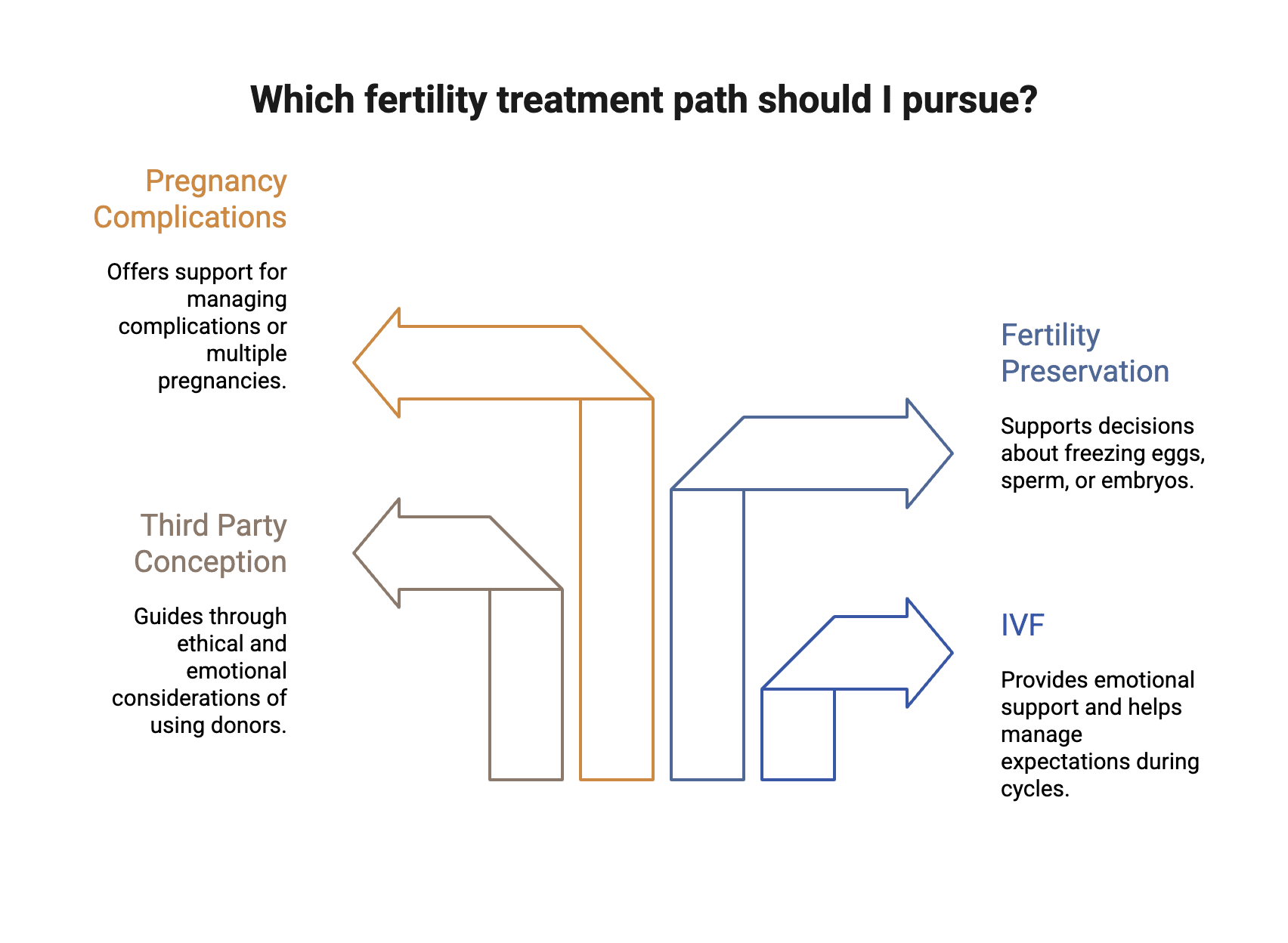
Fertility counseling adapts to your specific treatment journey, whether you’re pursuing IVF with intracytoplasmic sperm injection, considering egg freezing for fertility preservation, or exploring donor options.
For those undergoing in vitro fertilization (IVF), fertility counseling helps manage the emotional ups and downs of each cycle—from the hope of egg retrieval and semen analysis results to the anxiety of waiting for embryo transfer outcomes. When IVF cycles don’t result in pregnancy, fertility counseling provides compassionate support through grief while helping you decide whether to continue treatment.
If you’re considering third party conception through egg donation, donor sperm, or gestational carriers, fertility counseling guides you through emotional and ethical questions. Counselors help you think about disclosure to your future child, prepare for questions about genetic connections, and process feelings about alternative paths to parenthood. Research shows that early disclosure about donor conception tends to be healthiest for families, and counselors help you develop age-appropriate communication plans.
For individuals facing cancer treatment or other conditions that threaten fertility, fertility counseling supports decisions about fertility preservation through egg freezing, sperm banking, or embryo freezing. These decisions often feel rushed when you’re also processing a medical diagnosis, and having supportive space to talk through options provides clarity.
Fertility counseling also supports those dealing with pregnancy complications or multiple pregnancies resulting from fertility treatment.
When Should You Seek Help from a Mental Health Professional?
Seek fertility counseling when infertility starts affecting your daily life or relationships. You don’t need to wait until you feel overwhelmed—getting support early can prevent more serious mental health challenges.
Consider reaching out to an infertility counselor if you notice these signs:
- Persistent low mood – feeling depressed, anxious, or preoccupied with fertility most days
- Social withdrawal – avoiding situations involving pregnant friends or babies
- Relationship strain – experiencing increased conflict with your partner about treatment decisions
- Lost interest – having difficulty concentrating at work or in activities you once enjoyed
- Isolation – feeling like friends and family don’t understand what you’re going through
Many people assume they should handle fertility challenges alone, but you don’t have to. Unfortunately, many patients don’t receive information about psychological resources from their fertility clinic, so advocate for yourself.
You might also benefit from working with an infertility counselor at specific decision points—before starting IVF, when considering whether to continue after failed cycles, or when exploring options like embryo donation or adoption. An infertility counselor helps you process major decisions without pressure, giving you space to explore all fertility treatment options at your own pace.
Women often experience greater infertility-related stress than men, and couples frequently find that partners cope differently. An infertility counselor can help bridge these differences so both partners feel heard and supported.
How Can You Access Fertility Counseling in Charleston?
At Therapy Group of Charleston, our Mount Pleasant therapists help with the stress, grief, and relationship strain of infertility, in person or by secure video. The evaluations some fertility clinics require before donor or surrogacy arrangements are provided online by a psychologist at our sister practice, Therapy Group of Charlotte. You can also find fertility counselors through professional directories, filtering for expertise in reproductive health and infertility.
When choosing a counselor, verify their training and experience in fertility counseling. Some counselors work directly with fertility clinics, offering comprehensive support that coordinates with your medical care team. Others maintain independent practices, providing helpful separation between medical treatment and emotional support.
Fertility counseling services offer flexible formats—individual sessions for processing personal grief and anxiety, couples sessions for relationship challenges, or group therapy to connect with others experiencing infertility. Some people find that combining individual fertility counseling with support groups provides the most comprehensive support during their fertility journey.
If the stress of trying to conceive is affecting your mood or your relationship, the therapists at Therapy Group of Charleston can help, whether you come on your own or together for couples therapy. Schedule an appointment to get started with compassionate care tailored to your needs.
Frequently Asked Questions About Fertility Counseling
What is fertility counseling and who can benefit from it?
Fertility counseling is a specialized form of psychological counseling designed to support infertility patients facing fertility issues. It provides a supportive and compassionate space where individuals and couples can discuss the emotional aspects of infertility and receive guidance in making informed decisions about infertility treatment options. It’s offered by therapists with training in reproductive mental health.
When should I consider seeking fertility counseling?
You should consider fertility counseling if infertility starts affecting your daily life or relationships, or if you experience persistent feelings of anxiety, depression, or stress related to your infertility diagnosis or treatment plan. Early intervention can provide compassionate guidance and help you develop effective coping strategies to manage the emotional challenges of fertility treatment.
How does fertility counseling support those undergoing assisted reproduction?
Fertility counseling supports patients undergoing assisted reproduction techniques such as in vitro fertilization (IVF), intrauterine insemination (IUI), or intracytoplasmic sperm injection (ICSI) by helping them navigate the emotional ups and downs of treatment cycles. Counselors assist in managing expectations, processing grief after unsuccessful cycles, and providing education on treatment options, including preimplantation genetic testing.
Can fertility counseling help with sexual dysfunction related to infertility?
Yes, fertility counseling can address sexual dysfunction, including erectile dysfunction, which may arise due to the emotional and physical stresses of fertility problems. Mental health professionals provide psychological counseling to improve communication, intimacy, and relationship dynamics, enhancing overall emotional well-being.
How do I find a qualified fertility counselor near me?
Look for a counselor with training and experience in reproductive mental health and infertility. Local therapists specializing in infertility can be found through professional directories. Consider whether you prefer in-person sessions or online counseling for convenience. It’s important to choose a counselor who offers compassionate care and understands the complexities of fertility challenges and the counseling process.
Disclaimer: This article is for educational purposes only and is not a substitute for professional medical advice, diagnosis, or treatment. Always seek the advice of your physician or qualified mental health provider with any questions you may have regarding a medical or mental health condition. If you are in crisis or experiencing thoughts of self-harm, please call 988 (Suicide and Crisis Lifeline) or go to your nearest emergency room.